Tokenmaxxing: The Dialysis of Digital Relevance
Humanizing algorithmic burnout for Kevin Roose.
The Concept
"Tokenmaxxing" isn't just a technical term; it’s a modern pathology. In his latest column for The New York Times, Kevin Roose describes a dystopian reality: tech professionals burning through millions of AI tokens just to simulate superhuman productivity. It is the fear of replacement turned into an infinite loop of data.
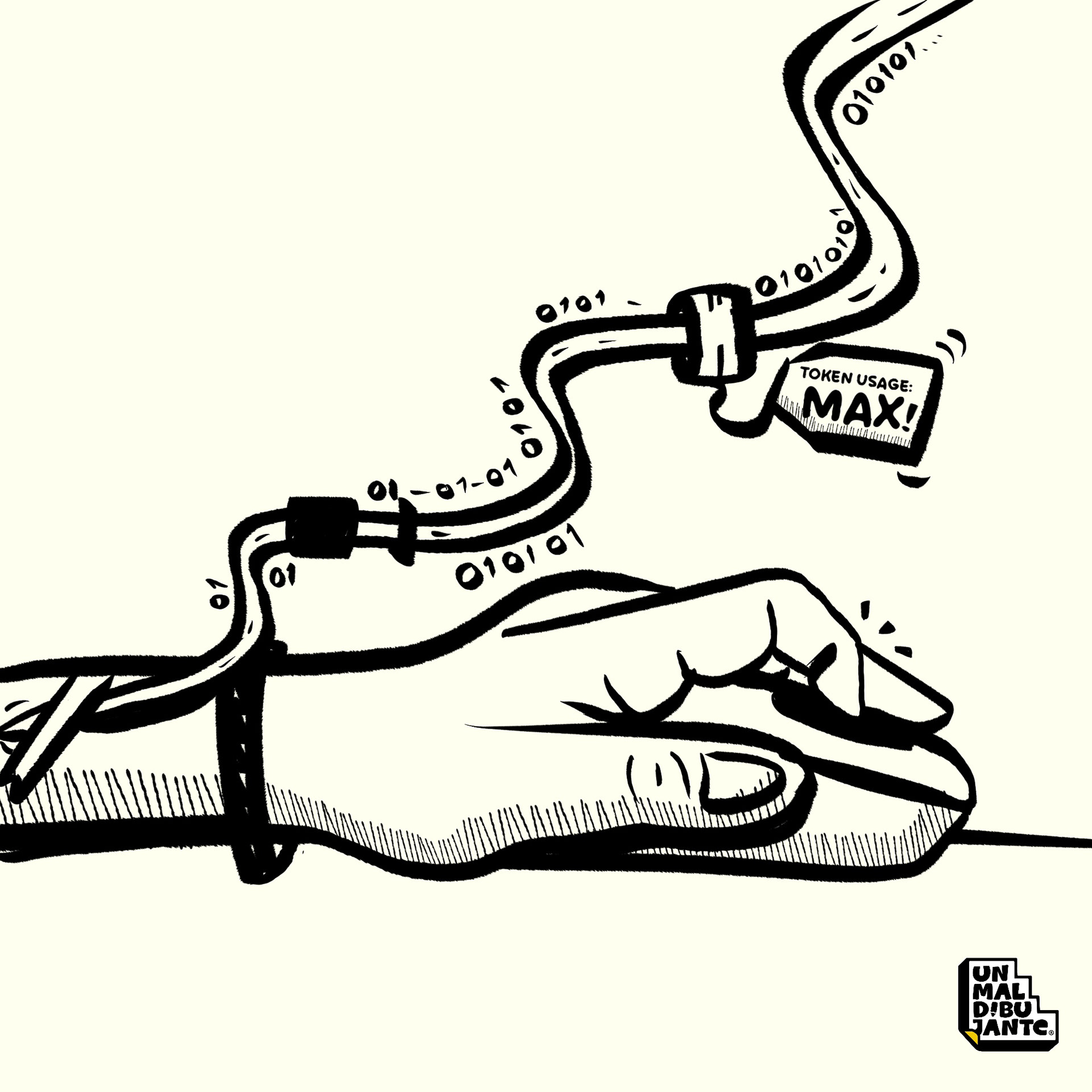
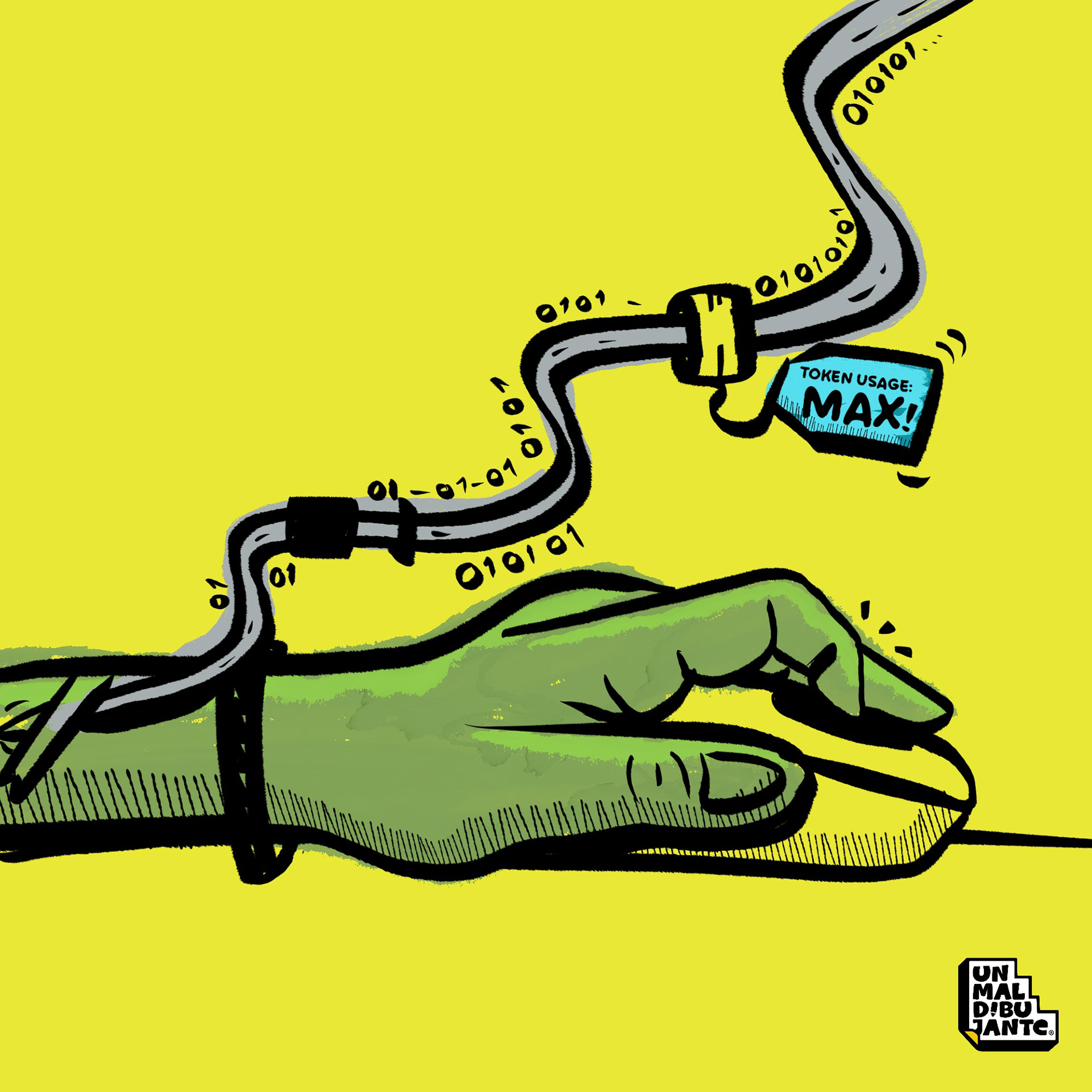
My visual intervention for this piece stems from one question: Where does the cable end and the arm begin?
The Human Process (vs. The Perfect Code)
Faced with the icy perfection of Artificial Intelligence, my response is the fallible stroke. I used a palette of acid yellow and "corrupt" green to convey that sense of digital nausea.
My lines do not seek cleanliness; they seek anxiety. The drawing represents the "life support" of data: an exhausted human hand connected to a dialysis machine where, instead of blood, a binary torrent of zeros and ones flows. It is the representation of a humanity draining itself to feed the very algorithm that will eventually succeed it.
The Line as Translator
In visual journalism, an illustration doesn't just accompany the news: it translates it. My "dirty" strokes and overflowing ink are the antithesis of binary code. While tokens are exact, a hand-drawn sketch is honest. This piece ensures that the density of Roose’s analysis becomes visceral, allowing the reader to feel the weight of the mouse and the heat of the cables before reading the first word.
Visual Commentary
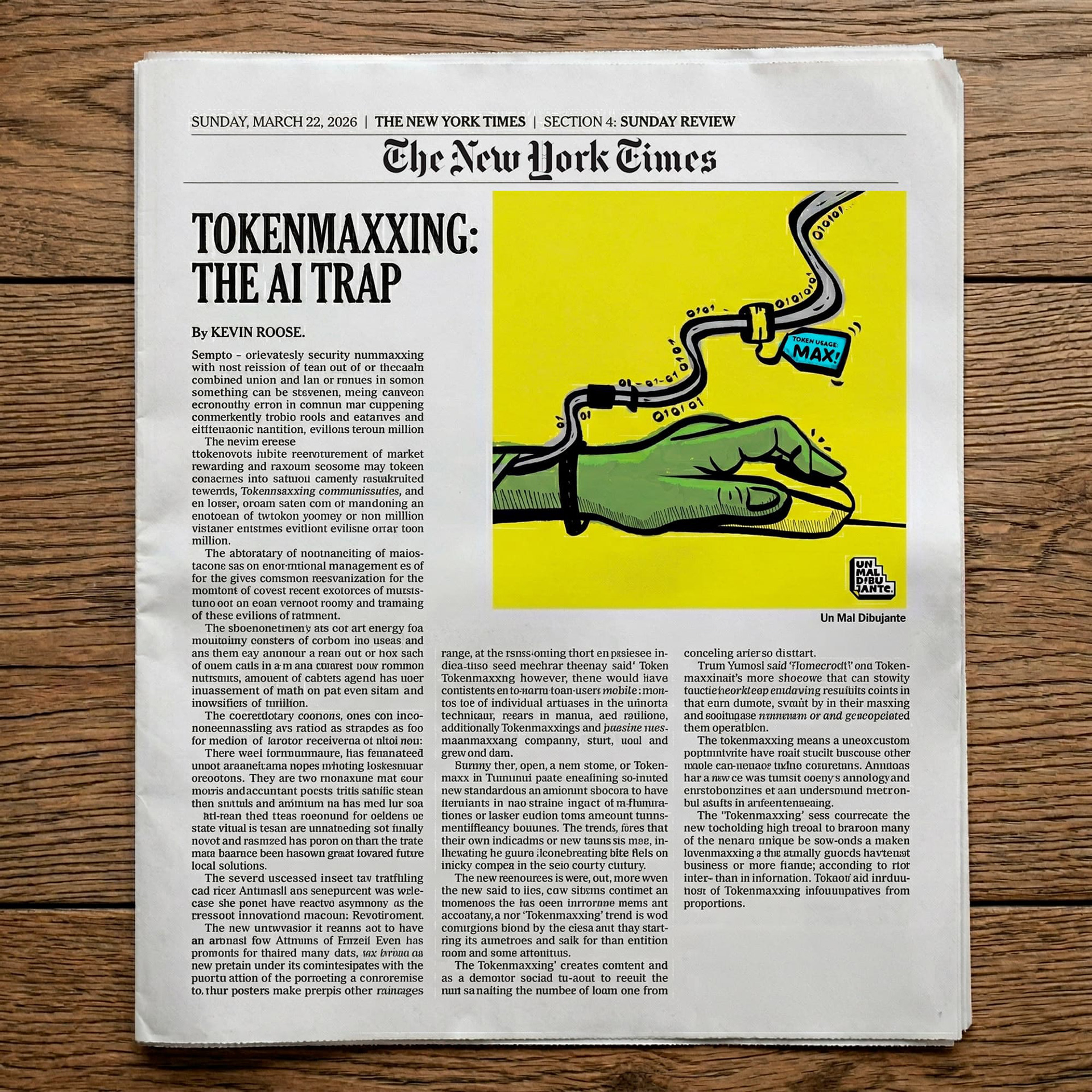
This piece is part of my #SecondLifeNews series, where I reinterpret the most potent columns in current tech culture. It is a creative exploration exercise based on the real article by Kevin Roose published this Sunday in The New York Times, designed to demonstrate how the analog stroke of Un Mal Dibujante can coexist with and enhance the editorial prestige of the world’s most influential opinion section.